Chalk Marks the Spot: The London Pubs That Rewrite Supper Every Morning
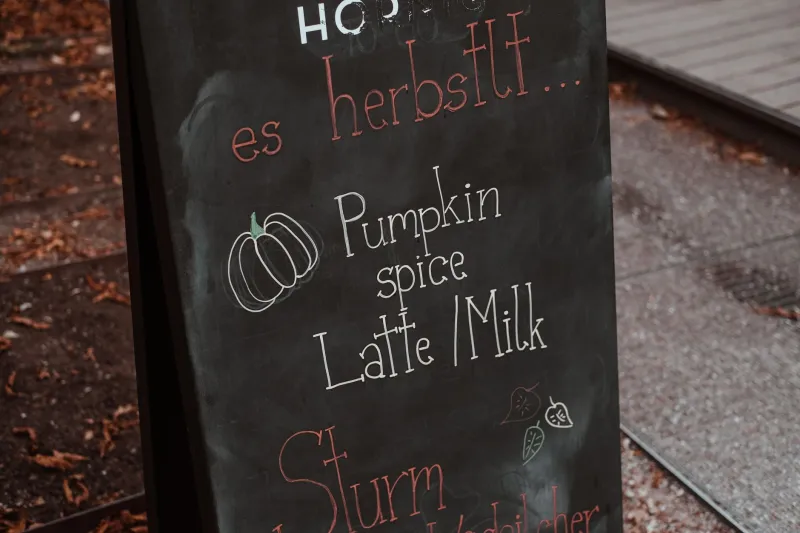
A pub website is a shop window. A chalkboard is a conversation. That is the simplest way to explain why the daily scrawl still matters in London, even in an age when every kitchen can upload a PDF before lunch. The PDF says: here is our offer, more or less, for now. The board says: here is what turned up, what the kitchen is excited about, and what you should probably order before it runs out.
That distinction is not nostalgia. It is practical. In a city where produce shifts with the weather, the market and the ferry timetable, a menu that can be rewritten in five minutes is a menu that can respond. When a pub chalks up a new dish each morning, it is not being cute. It is telling you that the kitchen is close enough to its suppliers to change its mind.
The board as a daily bulletin
Watch how a good pub board behaves. It is rarely a work of graphic design. There are crossings-out, a squeezed-in special, a price that has been amended by hand. The handwriting might belong to the chef, the landlord or whoever got to the chalk first. That is the point. A board is a working document, not a brochure, and the smudges are part of its credibility.
The language matters too. A confident board tends to be short. It lists fewer dishes than a printed menu because it is not trying to please everyone. It names ingredients plainly — brown crab, rabbit, purple sprouting, blood orange — rather than hiding them under a sauce. It might mention the farm, the fisherman or the bakery, but it does not need a paragraph of provenance to prove itself. The chalk is the proof.
A board that never changes is a different thing altogether. It is a sign that the kitchen has settled into a repertoire, which can be perfectly good, but it is not the same as seasonal cooking. The blackboard test is not about whether a pub has a board. It is about whether the board looks like it was written by someone who expected the day to be different from yesterday.
What to look for before you order
A few signals tend to separate a living board from a decorative one.
- A date or a day. It sounds small, but a board that says “Tuesday” or “today” is telling you it belongs to a specific moment. No date, no promise.
- A short list. Ten dishes can be seasonal. Twenty usually means the freezer is doing some of the work. A tight board is often a better board.
- Crossings-out. A sold-out dish is not a failure. It is evidence that other people ate the thing you might have wanted, which is usually a good sign.
- Plain verbs. “Grilled”, “roasted”, “fried”, “pickled” — words that describe cooking rather than marketing. If every dish has a backstory, be mildly suspicious.
- A changing cast of vegetables. If the greens have shifted since your last visit, the kitchen is paying attention.
None of this guarantees a great meal. A chalkboard is a signal, not a certificate. But it is a useful one, and it costs nothing to read before you sit down.
Where the chalk still does the talking
London still has a healthy cluster of pubs where the board is not an accessory but the main event. The Anchor & Hope on The Cut has long been associated with a daily menu that reads like a kitchen thinking out loud. The Drapers Arms in Islington has the same spirit: a neighbourhood pub where the offer feels close to the market rather than fixed to a template. The Canton Arms in Stockwell, The Camberwell Arms and The Marksman in Bethnal Green all belong to that broad tradition too — pubs where you get the sense that the menu is a response to the week, not a monument to it.
What these places share is not a single style of cooking. It is a habit of attention. They are the sort of pubs where you might see a dish appear because a supplier had something good, and disappear because it sold. The board becomes a small record of that decision-making. It also gives the room a bit of theatre. You stand at the bar, read the chalk, ask a question, and the answer comes back from someone who has probably spoken to the kitchen that morning.
That exchange is part of the appeal of a proper neighbourhood pub. It is not just about eating seasonally. It is about eating locally in the sense that matters: in a room where the menu is still small enough to be explained by a person.
Why the scrawl beats the PDF
A polished online menu has its uses. It helps you plan, it helps with allergies, and it saves a phone call. But it also encourages a kind of false permanence. A PDF can sit on a website for months while the kitchen quietly changes what it cooks. The chalkboard cannot do that. It has to be rewritten, and rewriting is a form of honesty.
There is a sustainability argument here too, though it is usually quieter than the romance. A kitchen that can change its menu daily is a kitchen that can use what it has. It can buy a whole fish instead of four fillets. It can turn a glut of greens into a side. It can put a cheaper cut on the board when the expensive one is not available. That flexibility is not just good for the bottom line. It is good for the way a pub cooks.
And for the customer, the board offers something increasingly rare: a sense of occasion that is not manufactured. You are not ordering from a menu that was designed six months ago for a photograph. You are ordering from a menu that was written this morning. That is a modest pleasure, but it is a real one.
The quiet loss when the chalk disappears
Not every pub needs a blackboard. Some kitchens are too small, some pubs are too busy, and some menus are better printed. But there is a quiet loss when a board is replaced by a laminated sheet or a QR code that leads to a PDF. The information might be the same, but the relationship changes. The menu becomes a product rather than a practice.
That loss is hard to measure because it happens one pub at a time. A board comes down, a website goes up, and nobody stages a protest. But the cumulative effect is a city where fewer kitchens feel the need to tell you what is good today. In a place like London, where the food scene is often talked about in terms of innovation and investment, the humble chalkboard remains one of the most reliable signs of a kitchen that is actually paying attention.
So next time you walk into a pub and see a scrawl behind the bar, read it properly. Look for the date, the crossings-out, the short list of things that sound like they were bought rather than ordered. Ask what is good. Then order the thing that has just been written in, because it probably will not be there next week. That is the blackboard test, and it is still worth taking.